







In the 12 months since the International Civil Aviation Organization (ICAO) fired the starting pistol on the Carbon Offsetting and Reduction Scheme for International Aviation (CORSIA), the global aviation sector has entered a decisive period. For the 500 attendees at this year’s Aviation Carbon conference in London, the shift in focus – from ambition to execution – was unmistakable.
With CORSIA compliance obligations now active for 2024 emissions, the questions coming from senior airline executives, finance teams and sustainability leads were practical and centred on delivery. Is eligible supply real? Where will it come from? How do we know that projects will be insurable?
CORSIA is becoming a functioning compliance system, but the market architecture is still catching up. The next 18–24 months will determine whether airlines can procure credits at scale, whether host countries can deliver robust Article 6 infrastructure, and whether carbon project developers can secure the insurance and investment needed to bring new supply to market.
CORSIA compliance is now real, airlines engaged but cautious
ICAO’s latest data shows 363 Mt of international aviation emissions now fall under CORSIA, generating an estimated 58 MtCO₂e of offset demand for the 2024 reporting year (Abatable). Meanwhile, progress on sustainable aviation fuel (SAF) is real but slow, with volume and last-mile delivery constraints adding years to the prospect of mainstream adoption.
That reality shaped the conference, where airlines were in ‘discovery mode’. For the first time, CORSIA is a concrete procurement requirement rather than a future planning exercise. Executives of every function and seniority are beginning to wrap their arms around a market with which many have little prior familiarity. Their primary concerns? Supply and risk.
Registry approvals are expanding, but real supply remains limited
Recent ICAO decisions materially expand the theoretical supply pool, with registry and subsequent insurance approvals giving the market more depth and credibility. Meanwhile, developers are working tirelessly to bring tagged credits to market – indeed, our client BURN announced its first CORSIA-tagged credits at the conference. Despite milestone moments such as these, however, issuance is still thin.
Current modelling suggests Phase I demand could exceed 236 MtCO₂e (IATA), significantly above known tagged supply. Without rapid acceleration, constraints will be visible by 2026.
Double-counting safeguards are credible, insurance enabling supply
One message landed exceptionally clearly during our panel discussions: airlines should not be worried about double counting. Regulators, registries, insurers, developers have collectively established a system that protects buyers by ensuring that once a credit is tagged as CORSIA-eligible, it cannot lose eligibility.
Where insurance matters is upstream. Insurance products such as Oka’s Corresponding Adjustment Protect policyprovide developers with compensation with which to replace credits if credits are double-claimed by the host country. These guarantees are now a prerequisite for market access, allowing developers to issue with confidence and buyers to transact and retire without absorbing host-country sovereign or procedural risk. Insurance is not the centre of the market, but it is becoming part of the market’s backbone.
Host countries are waking up to Article 6 revenue potential
One of the most encouraging moments was a side meeting with the team building Zimbabwe’s Article 6 infrastructure. Their work reflects a broader trend: governments increasingly recognise that participating in Article 6 is not a procedural burden but a revenue stream.
Developers are often the bridge, providing technical expertise, on-the-ground capacity, and transparency tools that help countries build high-quality, well-governed project pipelines. This is where CORSIA and Article 6 become engines of climate finance for the Global South.
The path forward: 2025–2027 will determine whether the market scales
The market structure underpinning CORSIA is now credible, and incentives are aligned. What the market needs next is scale via coordination between airlines, developers, host governments, insurers, brokers and registries. Liquidity rests on four conditions:
- Rapid, transparent tagging and issuance from registries and developers.
- Host-country readiness, including robust authorisation and MRV systems.
- Risk-transfer solutions that make projects bankable and credits eligible.
- Early airline procurement signals to unlock capital and accelerate supply.
CORSIA is here. The challenge now is building a market capable of delivering the volume and integrity that global aviation requires — and which could, if executed successfully, set a precedent for future mandatory offsetting schemes and carbon markets.
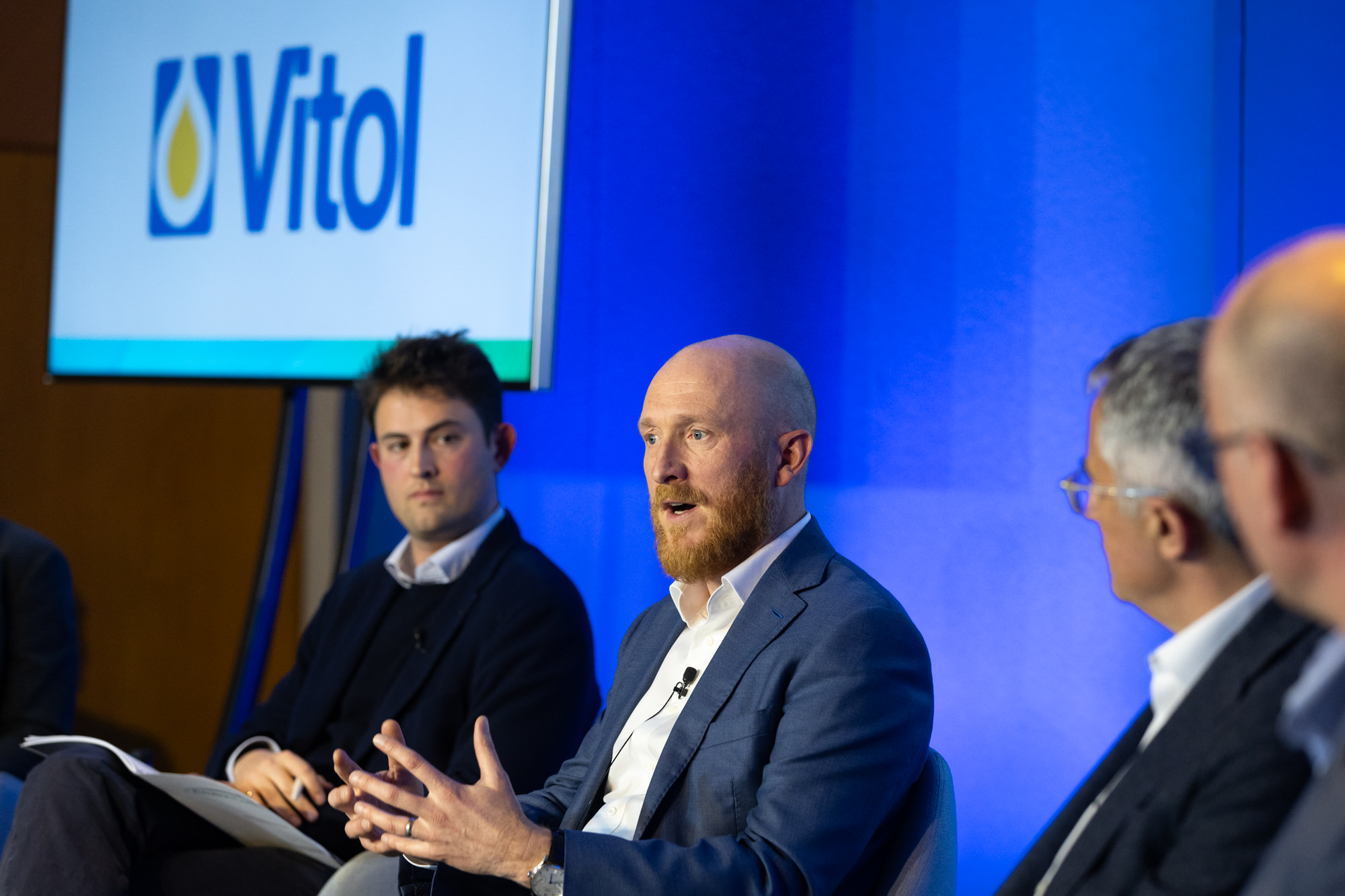
Oka Founder & CEO Chris Slater speaking at the CORSIA insurance solutions session at Aviation Carbon 2025