.png)

At London Climate Action Week, Oka brought together insurers and BURN to discuss CORSIA, carbon finance, and clean cookstoves.
On the evening of 25 June, a room of insurers gathered on the fiftieth floor of 8 Bishopsgate and looked down on the oldest risk market in the world. Lloyd’s was almost directly below. The Square Mile has been pricing risk for more than three centuries: ships, cargoes, fire, liability and, only very recently, carbon credits generated by clean cookstoves in sub-Saharan Africa.

The distance between those two worlds, from a trading floor in EC3 to a kitchen in Nairobi or Lilongwe, was the subject of the evening. Oka’s first London Climate Action Week event brought together its closest insurance and industry partners, alongside project developer BURN, to hear how that distance is being closed and what it takes to get there.
The world’s largest clean-cookstove developer, BURN operates across 12 African countries and employs more than 3,000 people. Its stoves have reached more than 6 million households, improving the lives of almost 30million people while generating 9.5 million carbon credits.
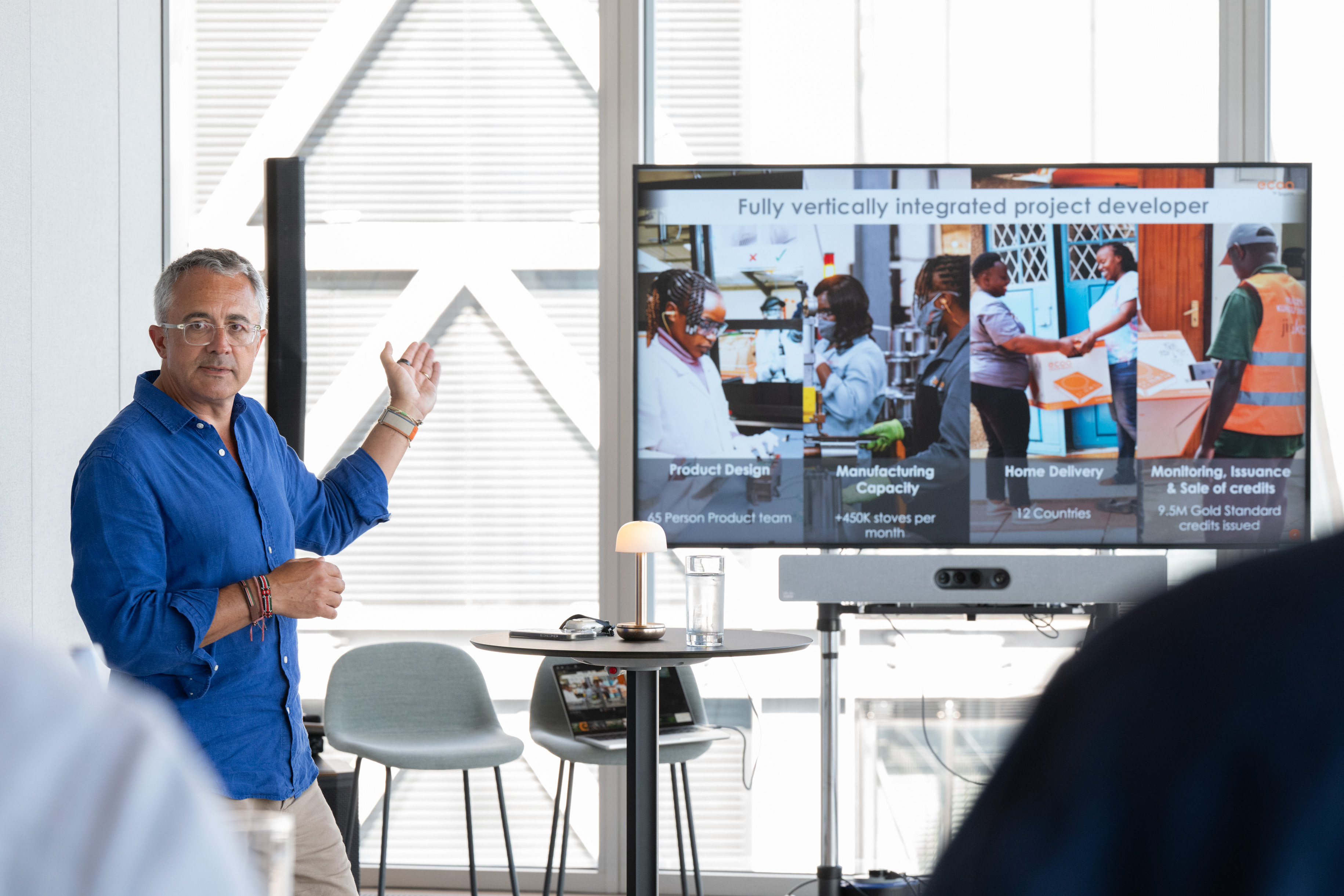
Opening the event, BURN’s Douglas Greenwell underscored the immediate reality behind those figures. Household air pollution from cooking with wood, charcoal and dung is one of the leading causes of premature death in parts of Africa, and families spend a substantial share of household income on fuel. Clean cookstoves reduce fuel consumption, improve air quality, and lower emissions. Carbon credits are the financing mechanism that enables their distribution at scale.
Most of the work happens long before a credit reaches the market. BURN is vertically integrated: designing, manufacturing, and distributing around 450,000 stoves a month, before monitoring their use and issuing the resulting credits. In parallel, the team has spent years engaging with governments to secure the Letters of Authorisation (LoAs) needed to make those credits eligible for the Carbon Offsetting and Reduction Scheme forInternational Aviation (CORSIA). Five had been signed by the time of the event, with more expected this year. A CORSIA-labelled credit is as much the end-product of sovereign diplomacy as it is of environmental action.

CORSIA sat behind much of the conversation. Airlines can only use credits that meet the scheme’s eligibility rules, including host-country authorisation under Article 6 of the Paris Agreement.Authorisations have been slow to arrive, keeping the volume of eligible supply well below even the most conservative demand projections. The shortage has, in turn, been slow to feed through to prices because much of the market is still waiting to buy, but that balance is unlikely to last as compliance activity accelerates.The shortage is where insurance enters the picture.

Some risks sit outside the quality of the credit itself. A project may be well run, verified independently, and registered correctly, yet still fail to deliver if a host government withdraws or does not complete the corresponding adjustment. That political and counterparty risk is one the insurance market is well equipped to underwrite.
BURN’s Oka-insured credits were the first CORSIA-labelled credits to reach the compliance market via the insurance pathway. The benefits of the pathway are twofold: developers can reach the market without waiting on biennial reporting cycles, while still being protected against the risk that the corresponding adjustment is rescinded; and airlines can exercise greater control over procurement, while still being protected against the risk thattheir offsetting claims are rendered ineligible in the window between authorisation and accounting.
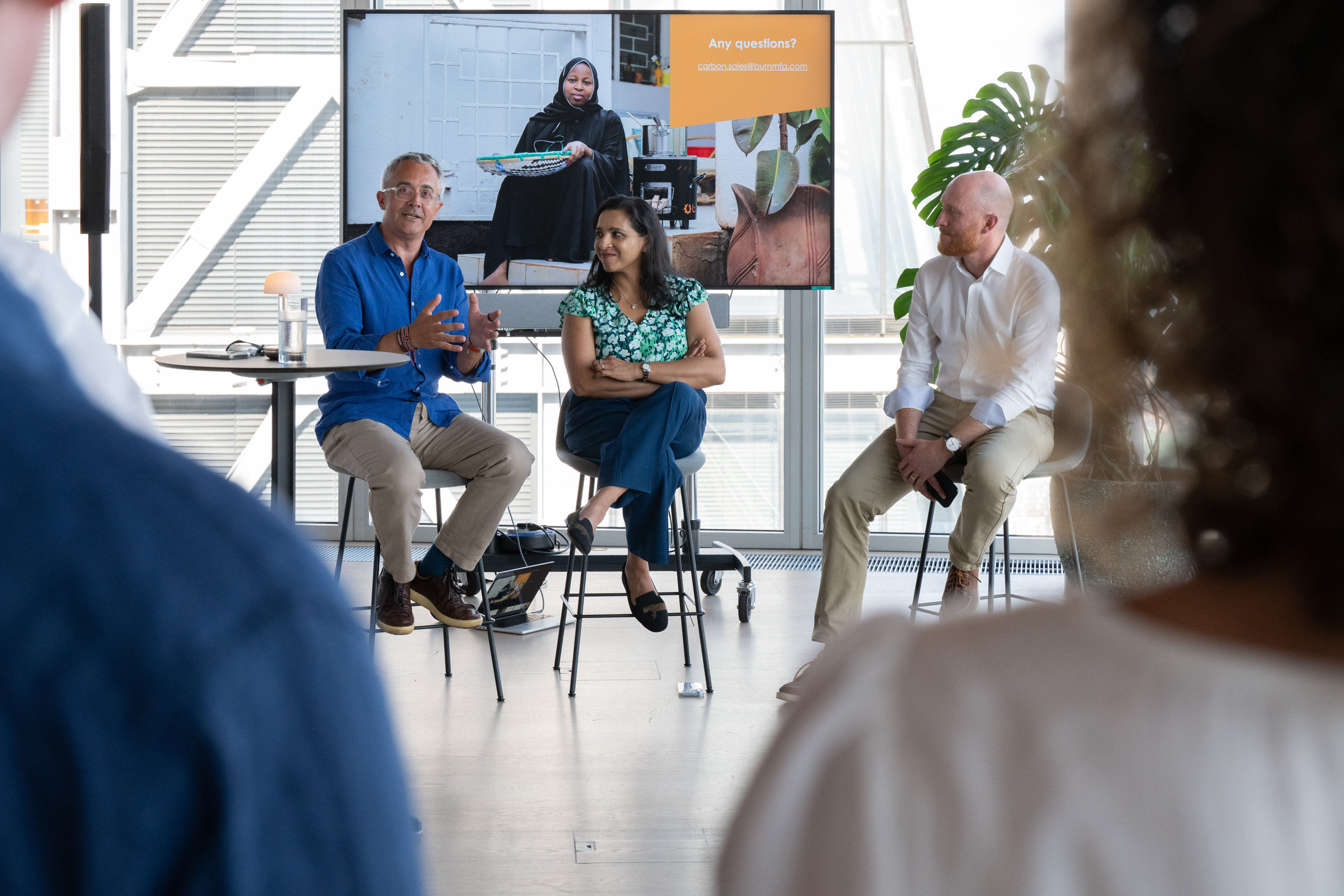
As the panel turned to Phase 2 of CORSIA, the bottleneck challenge was thrown into even sharper focus. More governments will need to authorise projects, more developers will need to navigate the process, and substantially more eligible credits will be required to meet current demand projections of 1.9-2.4 billion credits. If Phase 1 is tight, Phase 2 is a different order of problem: one that will require significantly more capacity from the risk market bringing supply forward.
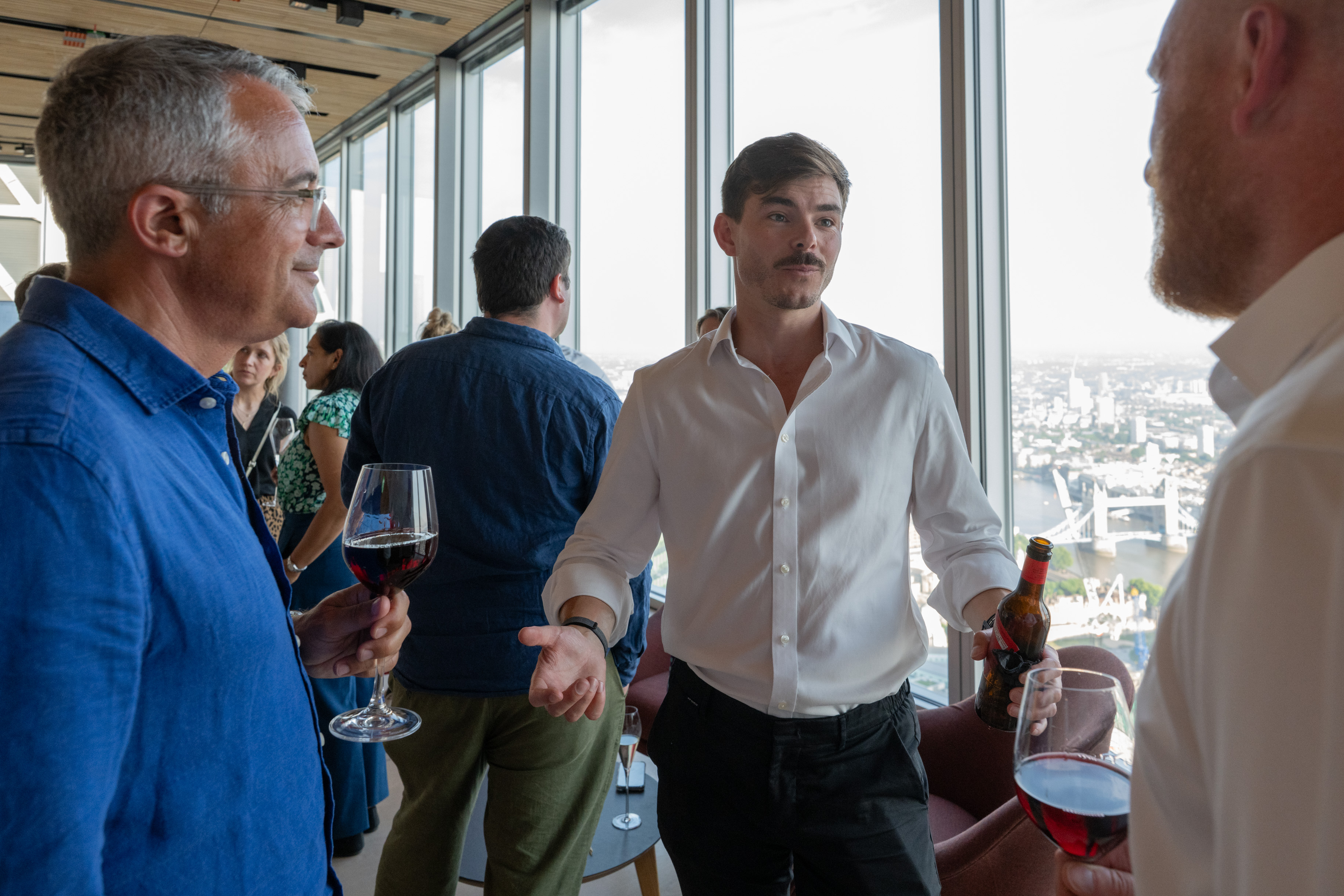
On that note, the formal session gave way to drinks and broader discussion. There was an obvious contrast. Fifty floors above London’sfinancial district, conversation centred on the nearly one billion people insub-Saharan Africa who still cook over open fires. Alongside the health and economic costs, that reality contributes to the loss of around 1.3 millionhectares of forest and 1 billion tonnes of CO₂ emissions each year, allavoidable when cleaner alternatives already exist.
Reaching those households depends on carbon finance, and carbon finance depends on a chain that stretches from a kitchen in Nairobi to agovernment ministry, a registry and, increasingly, the insurance market.




Photography by Charles Sturge